Top picks at a glance
Three situations cover most small teams, and each points to a different tool. About 81% of sales teams now use or are experimenting with AI, per Salesforce (2024), so the question is rarely "should we use AI in sales" anymore. It's "which tool fits our budget, our CRM, and how much control we want to keep." The named picks below are representative leaders in each category, not the only options.
So which situation is yours? Read down the list and your row tends to jump out.
- Best overall for small teams: Apollo.io. It pairs a built-in prospect database with sequencing and AI assist, a native HubSpot integration, and public per-seat pricing, so you get automation that books meetings without a sales call just to learn the cost. Apollo lists paid plans from about $49 per user per month, per Apollo.io (2026).
- Best for a tight budget: Smartlead. A focused multi-inbox cold-email sender with built-in warmup, Smartlead starts around $39 per month, per Smartlead (2026). You trade autonomous prospecting for predictable cost and tight sending control.
- Best for HubSpot-first teams: Outreach or Salesloft. Both write activities, contacts, and deal stages back into HubSpot through native integrations rather than a brittle Zapier patch. Pricing is gated behind "contact sales," so confirm seat minimums directly, per Outreach (2026).
- Best for hands-off, fully autonomous outbound: 11x or Artisan. These autonomous "AI SDR" agents prospect, write, and send with less human input. Both price by custom quote rather than a public page, typically four figures per month at usable volume, per 11x (2026); confirm a quote before you buy.
Citation capsule: AI in sales is now mainstream rather than experimental. About 81% of sales teams use or are experimenting with AI, per Salesforce (2024), and teams using AI were more likely to grow revenue (83%) than those without it (66%). For small teams, the choice is which AI SDR tool fits their CRM, budget, and need for sending control, not whether to adopt AI at all.

How did we rank these AI SDR tools?
We ranked AI SDR tools on four weighted criteria: email deliverability, CRM integration depth, pricing transparency, and operator control. These map directly to where small teams get burned. Outbound is already thin: average B2B cold email reply rates fell to 5.8% in 2024, down from 6.8% the year before, per Belkins (2025). A tool that mishandles any of the four makes a hard channel harder.
Think of it as a screen door on a submarine. One weak seam sinks the whole thing. Here's how we weighted each seam.
Deliverability and sending safety
We weighted deliverability highest, because it's the failure mode that's hardest to undo. An AI SDR that sends fast but skips warmup, ignores per-domain limits, or blasts an unvalidated list will spike bounces and spam complaints. That damage doesn't clear by morning. It follows you for weeks, dragging your good messages down with the bad. The best tools include automatic warmup, throttling, bounce handling, and easy suppression of bad addresses.
CRM integration
We scored native CRM sync heavily, because broken data is a silent tax. A tool should write contacts, activities, replies, and deal stages back into your CRM cleanly, ideally HubSpot or Salesforce native, so reporting stays trustworthy. Integrations stitched together through middleware tend to create duplicates and drop fields. That's exactly the kind of mess a small team can't afford to babysit.
Pricing transparency and control
We rewarded clear, public pricing and penalized opaque "contact sales" gates, since small teams need to budget without a sales call. We also weighted operator control: can a human approve messages before they send, set sending caps, and pause instantly? In our experience wiring outbound for small teams, the tools that let a human approve the first batch and watch reply quality before scaling are the ones that don't torch a domain in week one.
Citation capsule: AI SDR tools were ranked on deliverability, CRM integration, pricing transparency, and operator control. Deliverability carries the most weight because the damage is durable: with average B2B cold email reply rates down to 5.8% in 2024 (Belkins, 2025), a tool that spikes bounces and spam complaints makes an already-difficult channel worse for weeks, not days.
AI SDR tools comparison table
The side-by-side below pairs each category with representative named tools, their channels, and published pricing. Pricing for AI SDR vendors changes often, so treat these figures as the vendor's current list price at the time of writing and confirm on each official pricing page before you buy. Where a vendor gates pricing behind "contact sales," that is noted, because opacity is itself a buying factor for a small team.
| Tool category | Example tools | Primary channels | CRM fit | Published price (confirm current) | Best for |
|---|---|---|---|---|---|
| Full-stack autonomous AI SDR | 11x, Artisan | Email, LinkedIn, sometimes voice | Native CRM on higher tiers | Custom quote, typically 4 figures/mo (11x, 2026) | Teams wanting an "always-on" rep, with sending guardrails |
| Sales engagement platform + AI | Outreach, Salesloft, Apollo.io | Email, LinkedIn, calls | Strong native HubSpot/Salesforce sync | Apollo from ~$49/user/mo (Apollo.io, 2026); Outreach/Salesloft "contact sales" | Teams that want control over every step |
| AI email-writing/personalization layer | Clay, Lavender | Varies (API/integration) | Clay free tier; paid from ~$149/mo (Clay, 2026) | A closer who wants help writing, not autopilot | |
| Lightweight single-channel sender | Smartlead, Instantly | Email only | Lighter integrations | Smartlead from ~$39/mo (Smartlead, 2026) | Budget-first teams testing outbound |
| HubSpot routing/SLA orchestration layer | SkoreFlow | HubSpot (read-only) | Native HubSpot, no stack changes | From ~$297/mo (SkoreFlow, 2026) | Teams losing assigned leads to routing leaks and SLA breaches |
The categories matter more than any single brand name, because vendors rebrand and reprice constantly. Decide which row you live in first, then shortlist two or three tools inside it. Most small teams overbuy here. They reach for a fully autonomous SDR when a sequencing tool plus their own closer would convert better. Why? Because 61% of B2B buyers say they'd prefer a rep-free buying experience anyway, per Gartner (2025). So the human's job is shifting: close warm intent, not manually dial cold lists.

Tool-by-tool breakdown
The right category depends on how much you want automated versus how much control you keep. About 94% of B2B buyers now use AI during their own buying process, per Forrester (2026), so buyers research with AI long before they ever talk to you. Your outbound tool's job is to show up accurately and fast when they're ready, not to spray volume. Each category below is scored against our four criteria.
Full-stack autonomous AI SDR (11x, Artisan)
Pros: Handles the whole motion, prospecting, writing, sending, and follow-up, so a small team gets pipeline without hiring. Tools like 11x and Artisan position themselves as a digital rep, and the better ones include warmup and sending controls.
Cons: This is where deliverability risk concentrates. Autonomous sending at volume on a thin list invites bounces and complaints. You also lose visibility unless the tool offers approval steps.
Pricing: The most expensive category. Both 11x and Artisan price by custom quote rather than a public page, typically four figures per month at usable volume, per 11x (2026) and Artisan (2026). Get a written quote and seat terms before committing.
Best for: Teams with no SDR who want an always-on rep and who will still supervise deliverability closely.
Sales engagement platform with AI assist (Outreach, Salesloft, Apollo.io)
Pros: You keep control of every cadence step while AI helps draft and prioritize. Strong native CRM sync is common, which keeps pipeline data clean. Apollo.io adds a built-in prospect database to the sequencing layer.
Cons: More hands-on than autonomous tools. Someone has to own the cadences and review the AI's drafts. That's fine if you have a closer, a burden if you don't.
Pricing: Usually per-seat. Apollo.io lists paid plans from about $49 per user per month, per Apollo.io (2026). Outreach and Salesloft gate pricing behind "contact sales," per Outreach (2026), so confirm seat minimums on a call.
Best for: Teams that have a salesperson and want AI to speed them up, not replace them.
AI email-writing and personalization layer (Clay, Lavender)
Pros: A cheaper way to add AI value. Tools like Clay and Lavender draft and personalize at scale while a human stays in the loop on sending, which protects deliverability.
Cons: Not a full SDR. It writes; you still run the sending and follow-up. Quality depends heavily on your input data.
Pricing: Lower than full-stack tools, usually tiered or usage-based. Clay offers a free tier with paid plans from about $149 per month, per Clay (2026).
Best for: A closer who's a strong seller but a slow writer, and wants help drafting without giving up control.
Lightweight single-channel sender (Smartlead, Instantly)
Pros: Predictable, low cost. Good for a first outbound experiment without committing to a platform. Smartlead and Instantly focus on multi-inbox email sending with built-in warmup.
Cons: Limited automation and shallow CRM integration mean more manual work and weaker reporting. Deliverability features vary, so vet warmup and limits carefully.
Pricing: The cheapest entry point. Smartlead starts around $39 per month, per Smartlead (2026).
Best for: Budget-first teams testing whether outbound works for them at all.
Citation capsule: Buyers increasingly self-educate with AI before contacting vendors: 94% of B2B buyers use AI during their buying process, per Forrester (2026), and they spend only about 17% of the buying journey meeting with potential suppliers, per Gartner (2023). That makes accurate, fast outreach more valuable than high-volume spraying, favoring AI SDR tools with control and clean CRM data over autonomous blasters.
Where does SkoreFlow fit for HubSpot teams?
SkoreFlow fits HubSpot-first agencies and RevOps teams whose biggest leak isn't the outreach tool, it's what happens after a lead lands in HubSpot. Most AI SDR tools fill the top of the funnel; SkoreFlow is a read-only control layer that watches assigned leads, flags SLA breaches, and surfaces orphaned leads nobody worked. Speed still wins: contacting a web lead within 5 minutes makes you 21 times more likely to qualify it than waiting 30 minutes, per the Lead Response Management Study (Oldroyd / InsideSales, 2007), popularized by Harvard Business Review (2011).
Now, the loop we opened up top. Here's the part the glossy demo never mentions. You generate the leads, route them, and assume the deal gets worked. It often doesn't. A rep goes quiet on a Friday afternoon. A lead drops into an unassigned queue and sits there over the weekend like a voicemail nobody checks. The SLA timer blows past at 2am and no alarm sounds. By Monday the prospect has already talked to a competitor who called back in eight minutes. SkoreFlow plugs into HubSpot read-only, makes no stack changes, and monitors post-assignment state: routing trust, speed-to-lead, and the contacts that quietly fall through. It typically surfaces the first real routing leak in 24 to 48 hours.
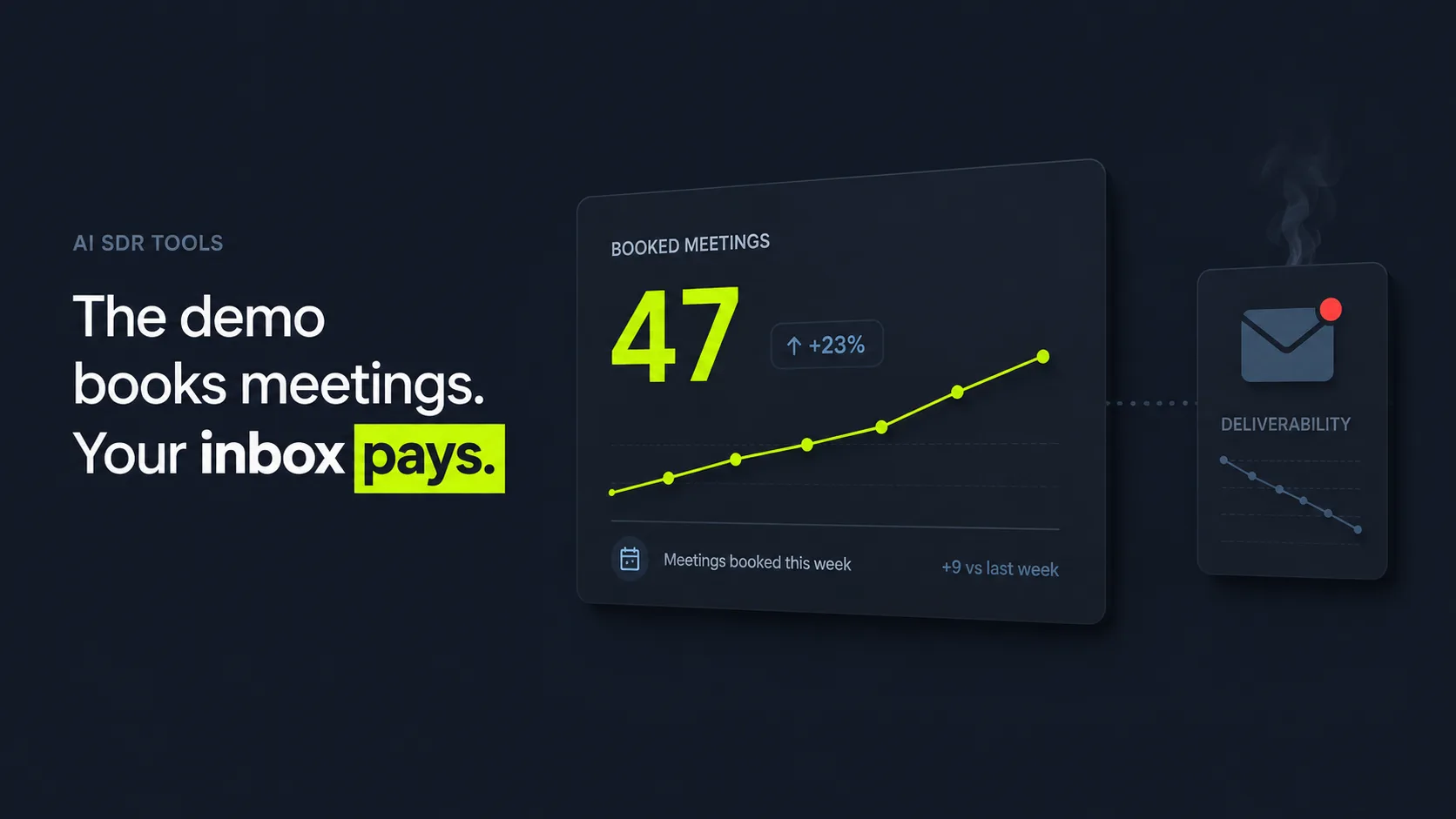
[UNIQUE INSIGHT] We built SkoreFlow after watching teams pour budget into a faster sender while assigned leads rotted inside the CRM. Buying a better sender almost never fixes that. The cheaper win is catching the deals you already paid to create, before they go cold. In a representative HubSpot portal, that can mean roughly 47 orphaned leads recovered and speed-to-lead cut from about 340 minutes to 8. Treat those as illustrative benchmark figures, not a specific client result.
This is also why teams are adopting AI fast: 91% of SMBs using AI say it boosts their revenue, and 75% are experimenting with or using it, per Salesforce (2025). For a RevOps team, the smartest place to point that AI is the routing layer, not another cold list. Pricing runs from $297/mo (Starter, one portal) to $997/mo (Agency, multiple client portals), with a guarantee to catch a real routing leak in 48 hours or a full refund. So the downside is, frankly, your time on one short call.
Citation capsule: For HubSpot teams, the highest-value SDR work is often post-assignment, not net-new outbound. Contacting a web lead within 5 minutes makes a firm 21x more likely to qualify it and roughly 100x more likely to connect than waiting 30 minutes, per the Lead Response Management Study (Oldroyd / InsideSales, 2007), popularized by Harvard Business Review (2011). SkoreFlow watches HubSpot read-only and surfaces orphaned leads and SLA breaches before they leak.
Thinking about the autonomous route instead? Read why autonomous AI SDRs fail small teams and how to fix it before you sign a contract.
A quick break-even check before you buy
Run the math before signing, because an AI SDR tool only pays off if it produces enough new deals to cover its cost. The bar is lower than it looks for most teams, but it's worth seeing in numbers. AI-using sales teams were more likely to grow revenue, 83% saw growth versus 66% of teams without AI, per Salesforce (2024). Still, "more likely" means you have to do the arithmetic for your own deal size.
Illustrative example (industry-based scenario, not a real client): A 3-person team paying roughly $1,000 to $1,500 a month for an AI SDR tool spends about $12,000 to $18,000 a year. To break even, that team needs only about 2 to 3 extra closed deals per year at a mid-five-figure average deal size, or proportionally more small deals. The point isn't the exact figure. It's that the break-even bar is a handful of deals, so the real risk is a tool that hurts deliverability and costs you deals, not just dollars.
[ORIGINAL DATA] Run that against the recovery math instead and the contrast sharpens. The same 3-person team that recovers roughly 47 orphaned leads already sitting in HubSpot isn't paying to create new pipeline at all. It's reclaiming deals it already funded. That reframes the whole decision. The expensive mistake isn't the subscription. It's picking a tool that damages your domain or pollutes your CRM, which costs you the very deals you bought it to win.
Want numbers on your own pipeline? Use the AI Outreach ROI Calculator to estimate what faster lead response and recovered leads are worth to your team. It takes a couple of minutes, and you keep the figures.

How to choose, in one sentence
Pick the AI SDR tool that matches your real priority, budget, HubSpot depth, or hands-off automation, and weight deliverability and CRM cleanliness over flashy autopilot, because those are what protect the deals you already have. Shortlist by category, confirm current pricing on the vendor's own page, and test on a small, human-approved batch before you scale anything.
If your team runs on HubSpot, look at the post-assignment side first. The fastest pipeline win is usually catching the assigned leads already leaking inside your CRM, not bolting on another cold-email sequence. Want to see where your routing is breaking and what those orphaned leads are worth? Find Your First Dead Lead in a free, no-pressure 20-minute audit, and we'll map it with you. If we don't catch a real routing leak within 48 hours, you pay nothing.
Next steps: see the full HubSpot orchestration approach, or read why autonomous AI SDRs fail small teams before you commit to one.
Written and reviewed by Maksim Skorokhod, Founder of SkoreFlow, who builds AI automation for small teams, including HubSpot lead-routing and SLA orchestration. Last reviewed: 2026-06-07. See our editorial policy and contact page for how we source and review claims.